The Magruder Road is a 100 mile dirt road that slices between the Selway Bitterroot Wilderness to the north, and the Frank Church River of No Return Wilderness to the south. It is the only such road in the country that allows you access deep into designated wilderness by vehicle. I was especially excited about this trip because of the possibility of catching my first bull trout.
I made the five hour drive to Boise to pick up my brother, and from there we made our way another four hours to our first camp site. Along the way, we made our way through the mountain passes following the Payette and Salmon Rivers. We made a few stops along the way to see some of what Idaho has to offer including a full Mammoth in it's own protective house in Grangeville. they found a bunch of mammoths in the valley several years ago, around Tolo Lake. As we made our way up the canyon to start the Maguder road, we past a few fish traps on the way set by Idaho fish and game. One was to catch adults heading up river, the the others were to catch the smolt heading down river.
 |
| Mammoth in Grangeville. |
 |
| Chinook salmon fish trap along the Red River. |
 |
| one of several spruce grouse we saw on the trip. |
As we headed across the Maguder road, I was expecting a rough bumpy ride, but the road was in great shape. Except for the roads leading to some of the lookout points, a car would be able to make this trip. We reached our first campsite at Poet Creek Campground with enough time to setup with daylight to spare. That night as we sat around the campfire, we talked about how neat it would be to hear wolves howling since we had not experienced this before. Well, the next morning, we awoke to the sound of a wolf's howl cutting through the still morning air. Hearing that made the trip, and it was only the first morning.
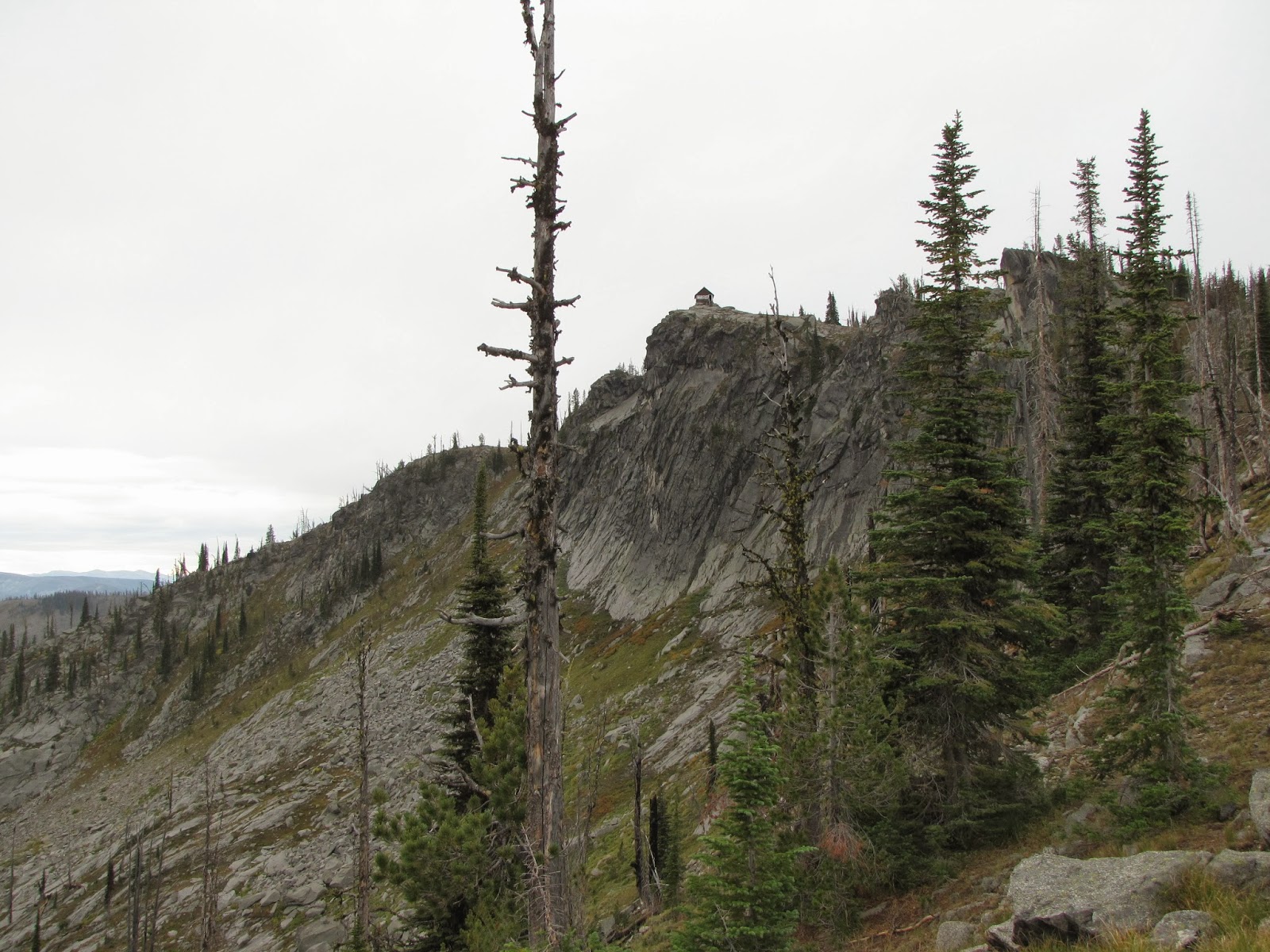
We packed up and continued on, hitting the Burnt Knob Lookout Station along the way. You definitely four wheel drive to get to it, unless you want to hike. The views at the top were spectacular, and worth the stop.
 |
| setting up at Poet Creek campground. |
 |
| looking over the map for tomorrows journey. |
 |
| We ate better on this trip. I like truck camping. |
 |
| low hanging clouds rolling over the landscape. |
 |
| Looking toward Burnt Knob Lookout. |
 |
Burnt Knob Lookout Station.
|
 |
| A view from the lookout. |
 |
| How the Maguder Road got it's name. |
 |
| Great views at Observation Point. |
We made it to the 12 mile Paradise Campground turnoff that heads down the Selway. We quickly set camp and made our way down the river to get some fishing in. The Selway is easily one of the best rivers we have fished. Jason was casting dry's, and had a hookup on his third cast. The fish gave him a great fight, but Jason was able to get him to the net. He caught cutthroat after cutthroat with the biggest ones going 16 inches. We also landed a few rainbow trout, and some steelhead smolt.
I chose to use a rapala with pinched barbs to get deep in the hopes of getting a bull trout. I didn't have to wait long, because my second fish landed was the first of seven bull trout I landed on the trip. They have such a different build than other trout I've caught. they almost feel rectangular, like a northern pike. We fished for the next several hours, and as we were ready to go, I felt I needed one more cast at a hole that a fish broke me off earlier that day. A few casts later, I had a big hit, and a fish that did not want to come in. It gave a valiant fight, but as I got him to the net I noticed something that shocked me. The 17 inch bull trout I just landed had the rapala that had broke off on the other side of his mouth! I got my lure back and a fishing story I'll tell for years to come.
 |
| A new river, and wilderness for Jason and I. |
 |
| Above: Fish on! Below: First fish landed on the trip. |
 |
| 16 inch westslope beauty. |
 |
| A look at the upper Selway. |
 |
| My biggest bull trout of the trip at 17 inches. |
We fished a few miles down the trail the following day with similar results. Jason broke his fly rod, but was able to use mine the rest of the trip. We were two weeks late on getting the see the king salmon run this river. We were told by a fish and game officer that there is a spot 7 miles down the trail where a bunch of bears congregate to feast on salmon. We plan on making the trip back up to see this in the next few years.
Along the trail, there was bear sign everywhere. From bear scat, to broken branches on the berry bushes and smashed grass where the bears had sat to eat berries. It's surprising that we didn't see one on this trip.
 |
| An elk antler we found along the river. |
 |
| Caddis fly casings on the antler. |
 |
| The powerful water made for some interesting rock formations along the river. |
 |
| The unique look of the bull trout. |
We made our way through the rest of the Maguder Road, stopping only to see the Deep Creek Stone Bridge built in the 1930's by the C.C.C boys (Civilian Conservation Corp.) and the Maguder Ranger Station. Once we made it to pavement, we sped our way through Montana, and back into Idaho to get some fishing in on the Lochsa River. We stopped Devoto Memorial Grove which is a grove of towering Western Red Cedars, and then continued on looking for fishing holes along the Lochsa. We caught several Cutthroat, but it just didn't compare to the Selway.
 |
| The Deep Creek Stone Bridge. |
 |
| Western red cedars in DeVoto Memorial Grove near the Lochsa River. |
 |
| A nice cutthroat out of the Lochsa. |
 |
| Jason working the riffles in the Lachsa. |
We finally made it to the Lower Selway, where we mad camp for the final night. The lower Selway was much larger, with really deep holes. It would have been great if the salmon were running, but it wasn't the king of water we like to fish. I managed a few cutthroat, but we decided to head out and get home earlier the next morning. We stopped along the Middle Fork of the Clearwater River to make a few casts, but the abundant blackberry patches that lines the river took us away from fishing. These wild berries tasted so good!
We stopped in McCall for a burger before making it back to Boise. Overall, this was awesome! If you were to do it, I would focus on staying more days fishing the Upper Selway. I don;t know of a more remote place to can get to and not have to hike. I'm looking forward to our return trip to this special place in Idaho.
 |
| Bridge crossing the lower Selway. |
 |
| Last night of the trip. |
 |
| Making a few casts on the lower Selway. |
 |
| Now this is how you cross a river... |
 |
| Blackberry bushes lined the bank of the middle fork of the Clearwater. They took me away from fishing. |